
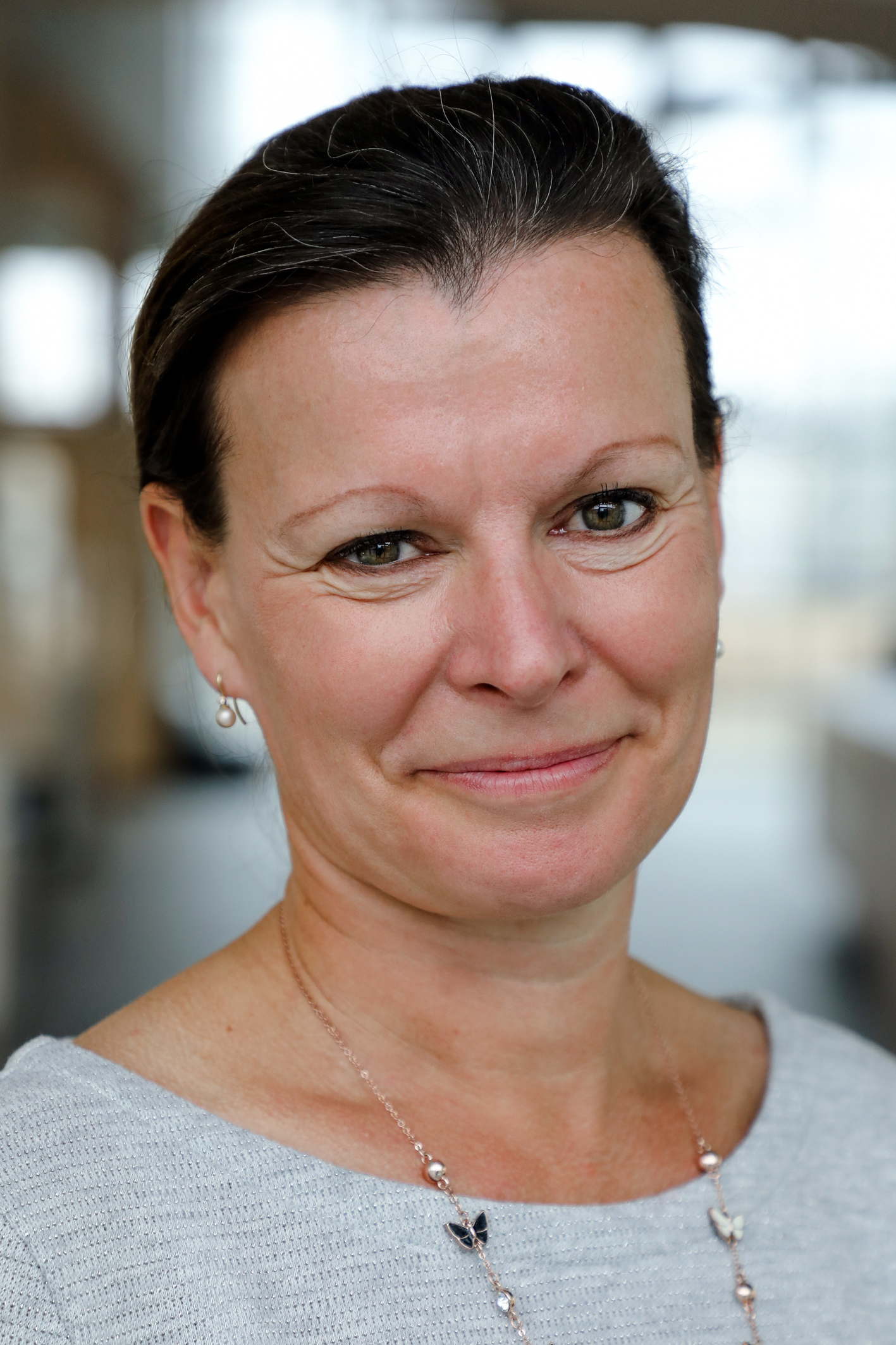
Interview with Inka Tews, Hensoldt AG
A breath of fresh air in the company
Defense capability begins with people who develop and build the corresponding systems and solutions. Hensoldt specializes in sensor solutions for defense and security applications, including air defense. The company, based in Taufkirchen near Munich, employs around 9,500 people and is growing rapidly. Hensoldt is looking in particular for highly specialized experts in system and software development as well as electrical and communications engineering. In recruiting, the employer relies, among other things, on employees from technically oriented companies that are cutting jobs. Chief Human Resources Officer Inka Tews gives an initial insight into how the many new employees are affecting the team and corporate culture, and what she would like from policymakers with regard to the labor market.

“We see a mutual influence both in the way we work and in the basic mindset. This confirms our view that diversity is very helpful for working together, but also for the project teams’ results.”
DEKRA: How many new employees are you currently looking for?
Tews: Last year we hired around 1,300 employees, and this year we want to increase recruitment to more than 1,600 hires. We assume that our company’s growth will continue next year too, so that we expect hiring on this scale in the medium term as well. The ratio of replacement needs to new positions is about 1:2.
DEKRA: For which areas of the company do you need new staff?
Tews: Currently, experts in the fields of system development and system integration, IT, sensor technology and cybersecurity are particularly in demand. As our business grows, so does the need for management capacity, e.g. project management and finance.
As for the fields of study, we primarily look for technical qualifications, above all in the areas of system development, software/IT, electrical and communications engineering and optronics.
DEKRA: Which qualities do you value most?
Tews: Apart from professional qualifications, competencies such as systems understanding, the capacity for innovation, proactive, independent action and the ability to work in a team play a major role.
DEKRA: Can you deploy specialists from other industries directly?
Tews: We often take on specialists from other industries, especially from the automotive sector. Because of the special requirements and regulations in our field, this usually requires concentrated onboarding. For this we have a special onboarding process in which mentors familiarize the new employees individually with the most important company rules and their future area of work. In addition, we attach great importance to integrating the colleagues into the area-specific further-training programs in which special skills are taught in a targeted way.
DEKRA: Hensoldt recently offered to take on parts of the workforce of other companies. How was that received?
Tews: It is still too early to take stock. But from the initial contacts alone we can see that there is very great interest. We are confident that over the course of the year we will be able to cover a substantial part of our needs through these offers.
“We would like to see transitions between companies and industries supported more strongly and bureaucratic hurdles reduced – for example through faster placement processes, targeted qualification offers and closer networking between companies that are downsizing and those that are scaling up.”
DEKRA: These specialists come from less regulated industries and possibly a completely different corporate culture. Have you noticed changes in the company as a result?
Tews: Definitely. We see a mutual influence both in the way we work and in the basic mindset. This confirms our view that diversity is very helpful for working together, but also for the project teams’ results.
Initial examples show that experience from other industries has an invigorating effect on the teams, while the strict approach according to aviation- or military-specific regulations sometimes also requires a certain adjustment from our new employees.
As for a possible change in our corporate culture due to employees from other industries: we have been working for some time on developing our corporate culture, with a focus on taking responsibility and transparency. It is always difficult to attribute changes to individual factors, but the influence of new viewpoints certainly has an accelerating effect here.
DEKRA: What are the biggest challenges in recruiting in the defense industry?
Tews: The challenges hardly differ anymore from those of other growth-oriented technology companies: attracting specialists in sufficient numbers and with the right competencies in order to increase our delivery capacity as quickly as possible.
DEKRA: What do you want from policymakers with regard to the labor market?
Tews: The German labor market faces the challenge of mobilizing specialists more quickly between shrinking and growing industries. The need is enormous, especially in technology-driven future industries. We would like to see transitions between companies and industries supported more strongly and bureaucratic hurdles reduced – for example through faster placement processes, targeted qualification offers and closer networking between companies that are downsizing and those that are scaling up. The decisive factor is to deploy existing competencies as quickly as possible where they are needed.
Back